

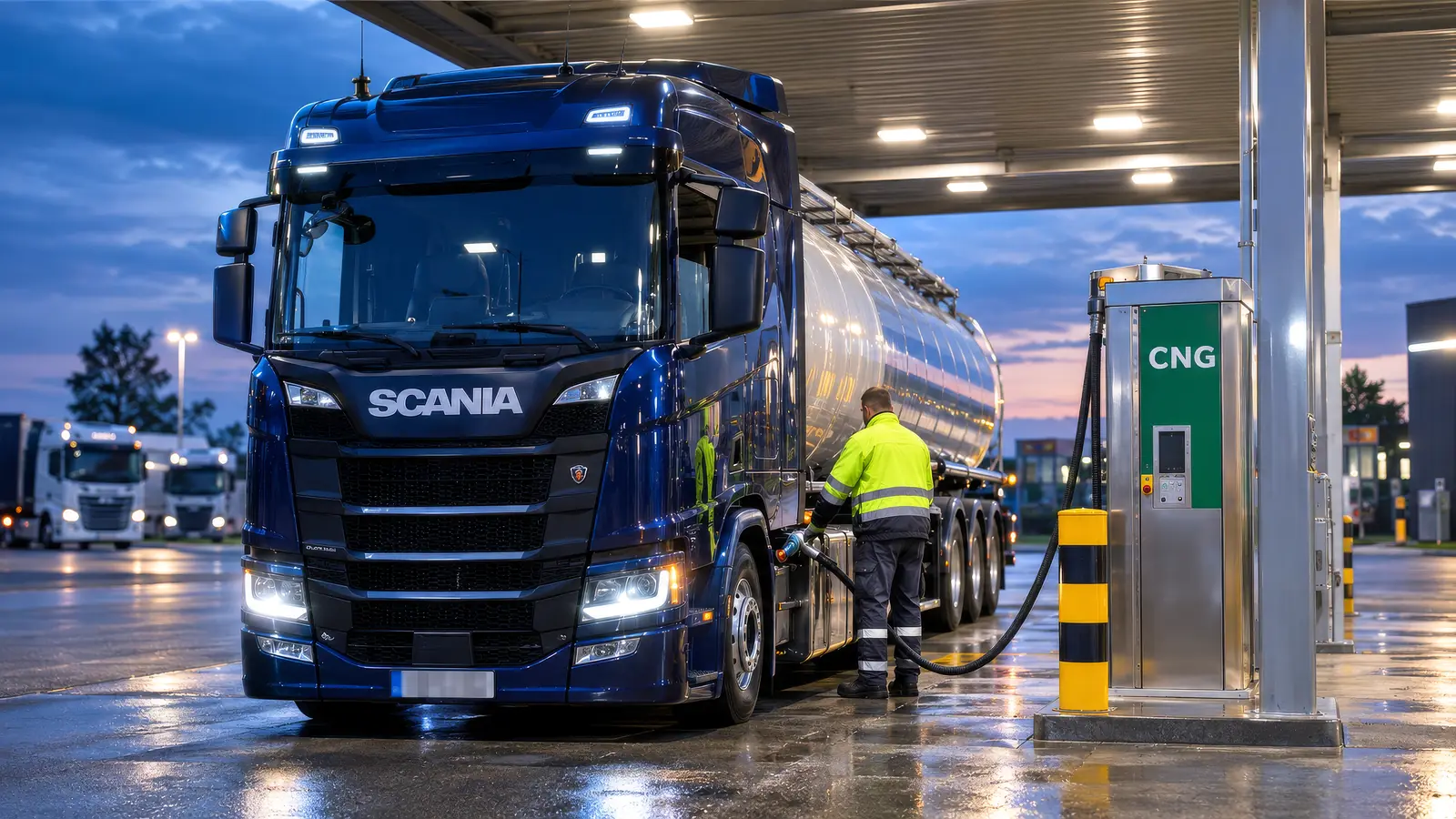
For buyers
Local residues become local fuel.
CleanCycle upgrades raw biogas from existing biogas plants into biomethane and bio-CNG – as fuel for HGVs and for everyone who has to meet their greenhouse gas reduction quota (GHG quota).
Calls are answered first by CleanCycle’s AI assistant.
- Fleets
- Haulage companies
- Bus operators
- Municipal fleets
- Filling stations
- Obligated parties
The virtual pipeline
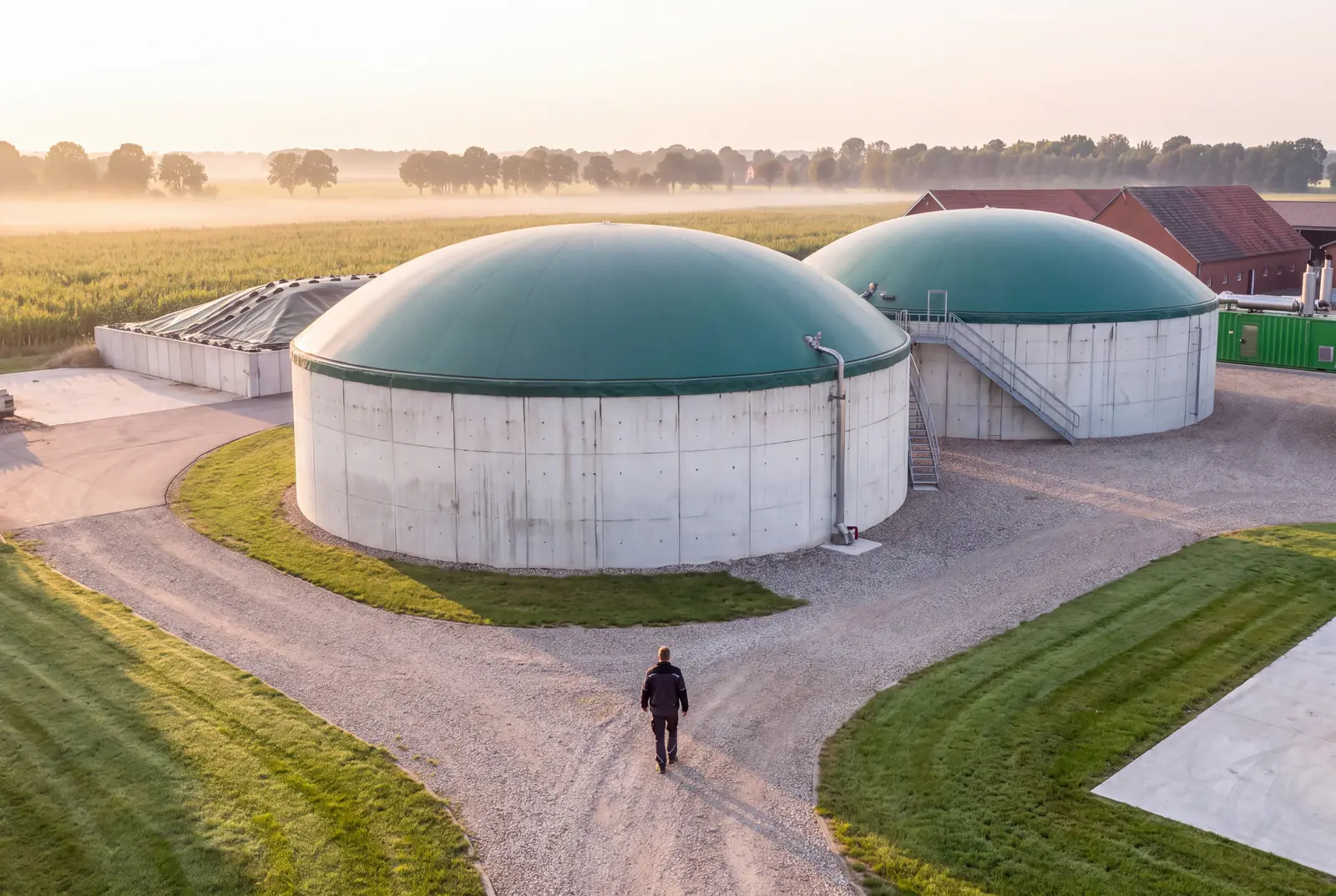
- Biogas plant Raw biogas from the region
- Upgrading min. 97% methane
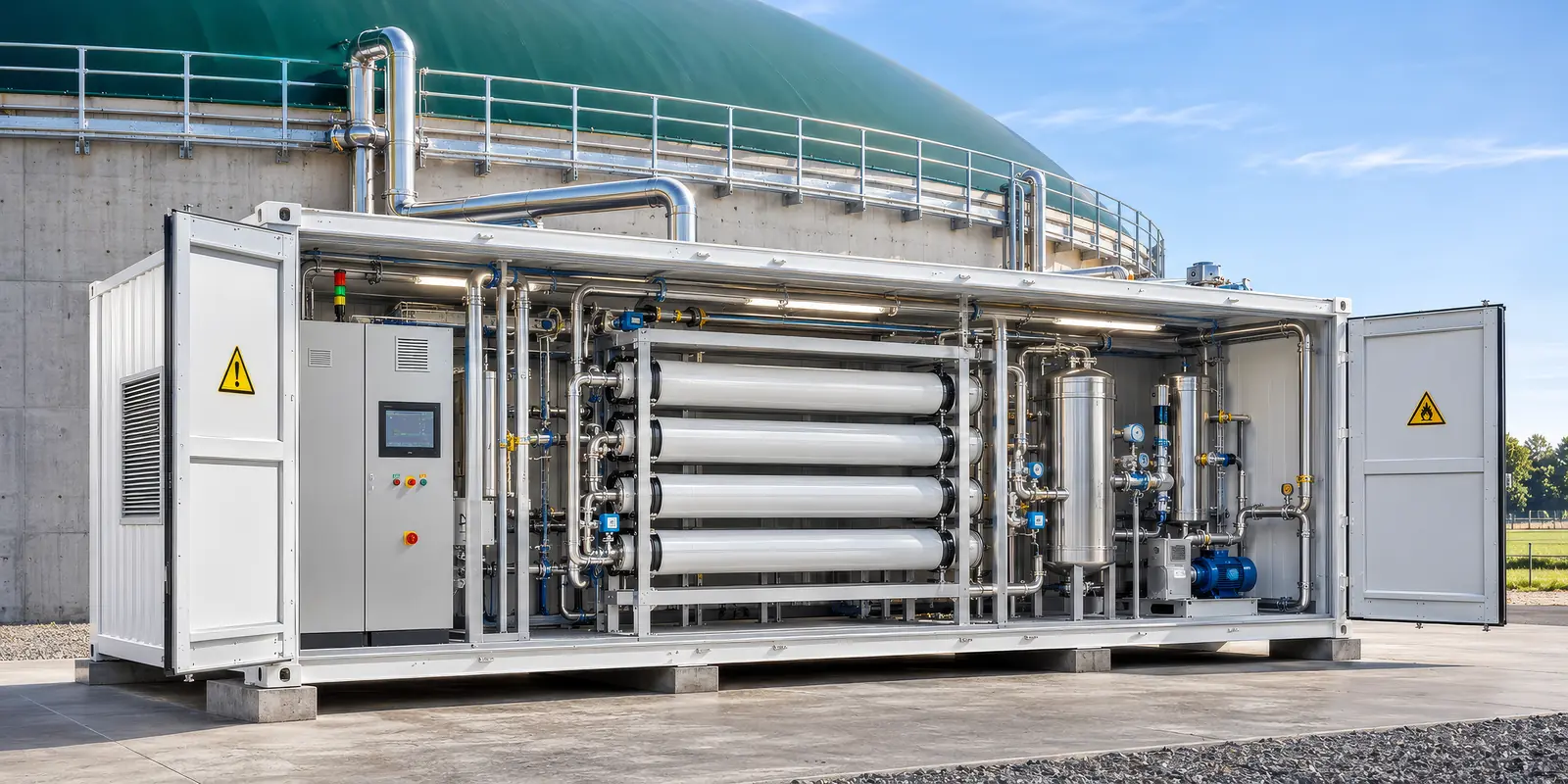
- Compression 250–300 bar
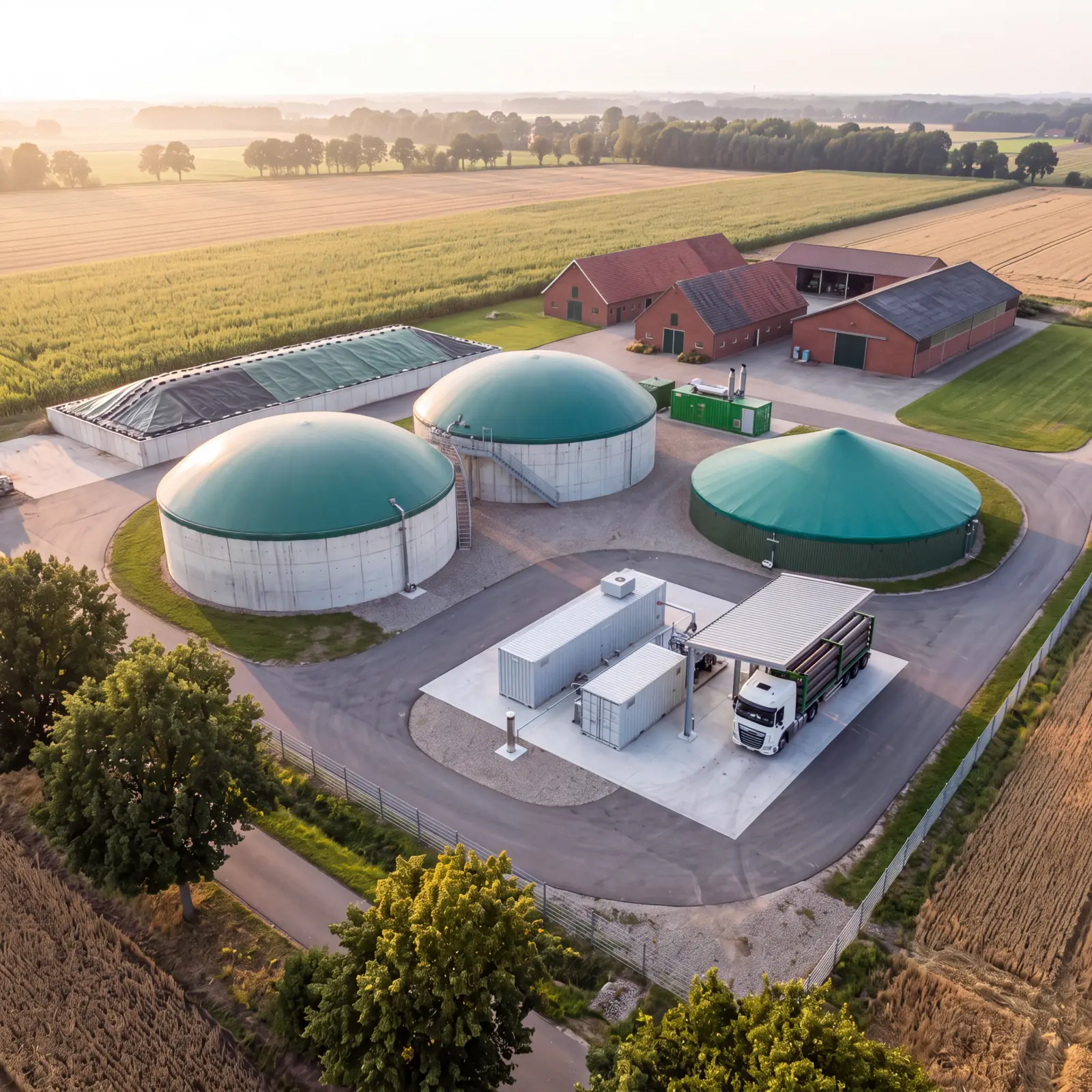
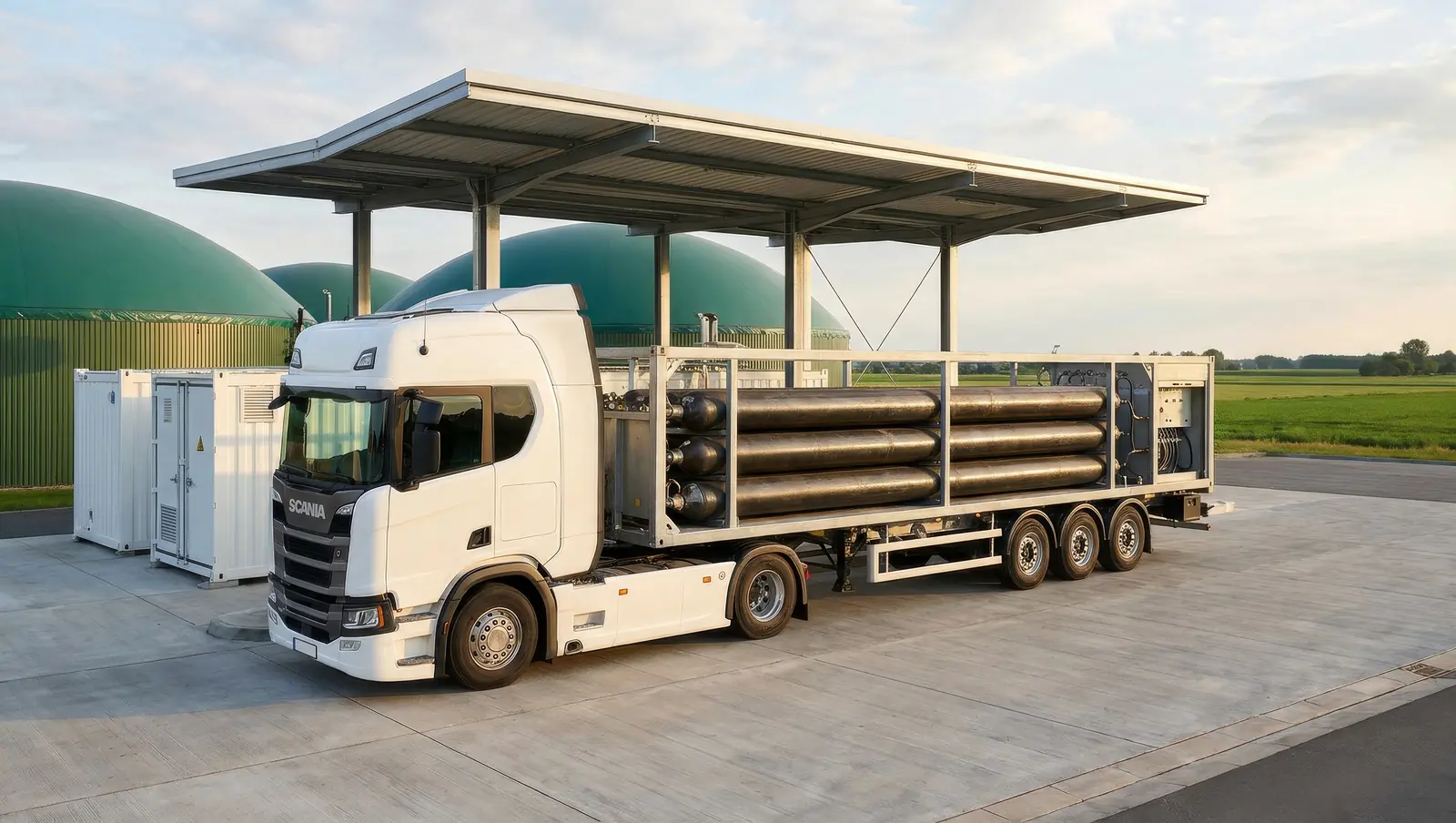
- Trailer to the hub or directly to the customer
- Your fleet Bio-CNG in the tank
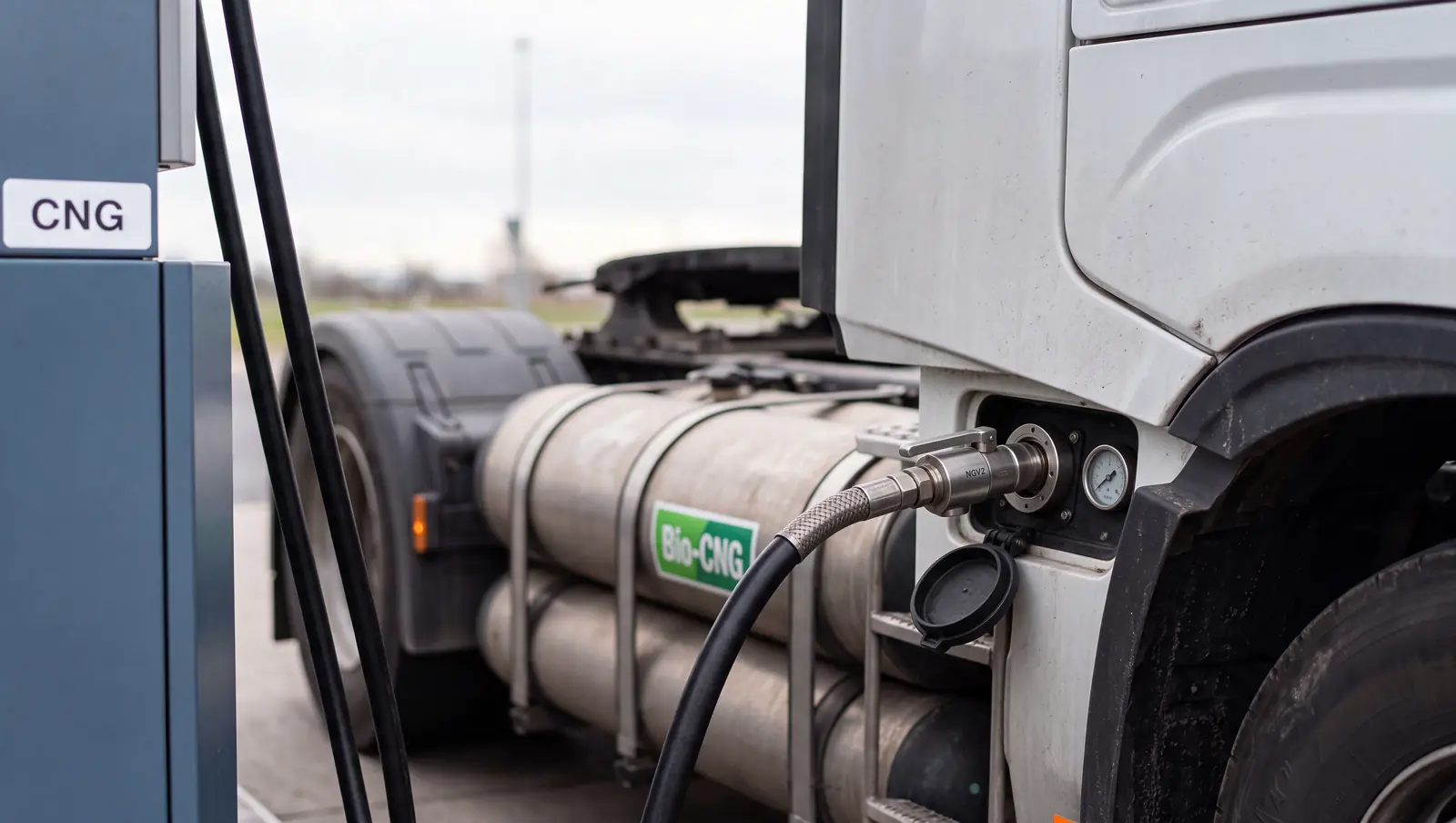
Illustrative images, AI-generated – not a specific plant, not a specific vehicle, not a customer site.
Bio-CNG from existing plants
An obligation that grows every year
| Year | Quota |
|---|---|
| 2026 | 12.0% |
| 2027 | 17.5% |
| 2030 | 26.5% |
| 2035 | 41.0% |
Source: Section 37a(4) BImSchG (Federal Immission Control Act)
What we clarify with you
Together with you, we clarify your requirements, your location and the right form of delivery. This is what we discuss with you: minimum volumes, contract models and contract terms, pricing and filling station locations.
Enquire about your requirements
Common questions about bio-CNG
What is bio-CNG from CleanCycle, and where does it come from?
Bio-CNG from CleanCycle is fuel made from the raw biogas of existing biogas plants in the region, upgraded into biomethane – for HGVs and for everyone who has to meet their greenhouse gas reduction quota (GHG quota). CleanCycle does not build new plants but upgrades existing infrastructure; over 20 sites are under project development. Bio-LNG is in preparation.
What methane content and pressure does CleanCycle’s bio-CNG have?
CleanCycle’s biomethane contains at least 97% methane – that is what the membrane upgrading is designed for – and is compressed to 250–300 bar and delivered by trailer. Its energy content is 50 MJ/kg, the lower calorific value of biogas of natural gas quality (Directive (EU) 2018/2001, Annex III).
How much greenhouse gas does bio-CNG save compared with fossil fuel?
Bio-CNG saves greenhouse gases compared with fossil fuel – how much depends on substrate and process: for biomethane from slurry, RED II gives typical savings of more than 100%, for maize and biowaste lower values (Directive (EU) 2018/2001, Annex VI, Part A, biomethane for transport). A saving of more than 100% means a negative greenhouse gas balance in the calculation. If a plant uses slurry or manure, this significantly improves the greenhouse gas value (GHG value) of its gas.
How is bio-CNG delivered?
CleanCycle delivers bio-CNG via the virtual pipeline: the biomethane is upgraded at the biogas plant, compressed to 250–300 bar and taken by trailer to the hub or directly to you. Several plants in a region supply a shared hub. Where a grid injection point is nearby, the gas goes into the grid.
What does bio-CNG have to do with the GHG quota?
Bio-CNG from CleanCycle is sold together with the GHG quota and is intended for everyone who has to meet their GHG quota. The GHG quota obliges companies that place fuels on the market to reduce the greenhouse gas emissions of their fuels by a percentage set by law (Section 37a BImSchG, Federal Immission Control Act). Under Section 37a(4) BImSchG, it is 12.0% (2026), 17.5% (2027), 26.5% (2030) and 41.0% (2035).
What volumes, contract terms and prices apply to bio-CNG from CleanCycle?
We discuss minimum volumes, contract models and contract terms, pricing and filling station locations for bio-CNG with you. To do so, we clarify your requirements, your location and the right form of delivery. You can send an enquiry in three short steps; we will get back to you within 2 working days.