

Solution
Four modules, one chain
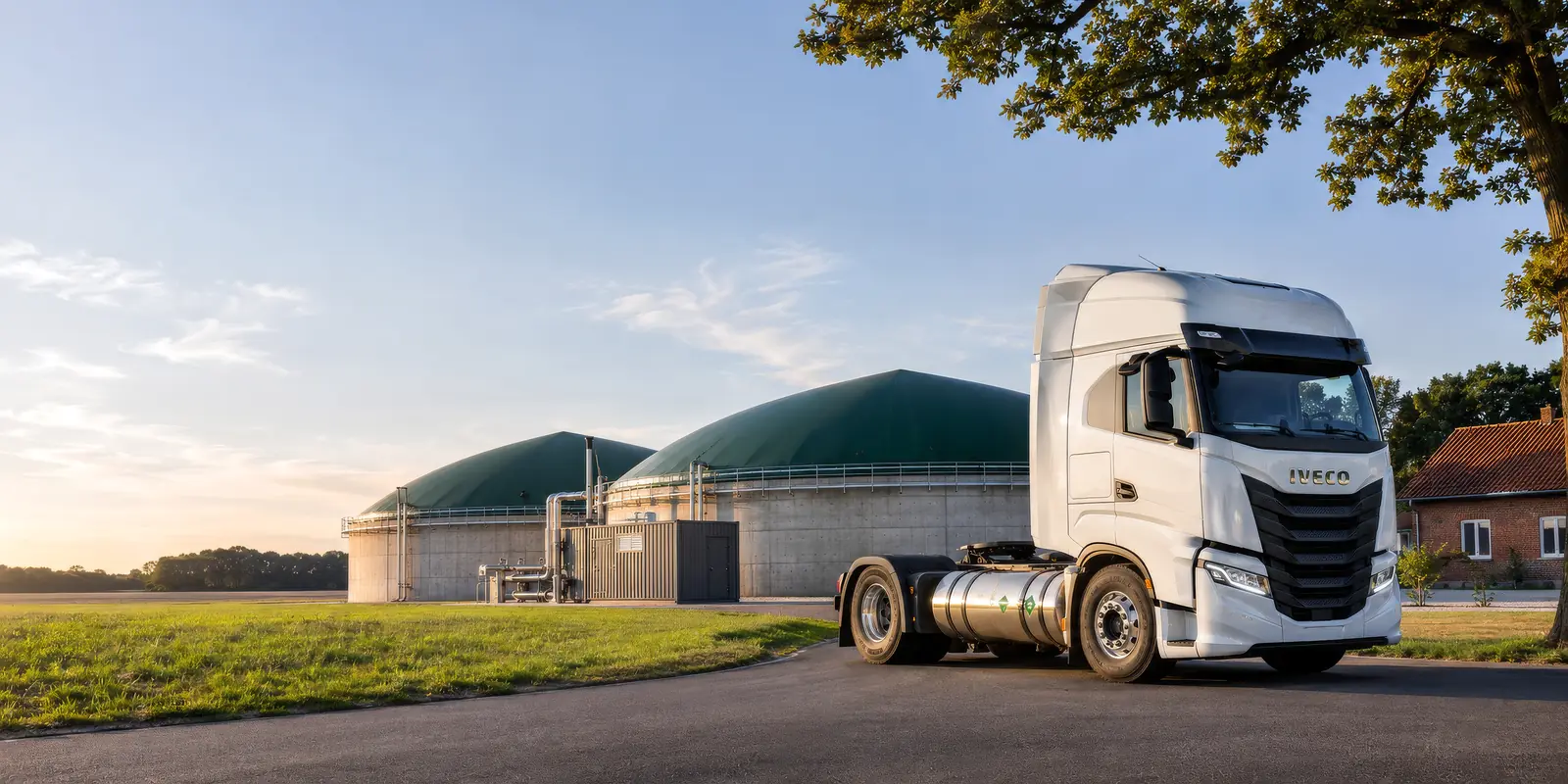
We do not build new plants – we upgrade existing infrastructure: securing raw biogas from existing plants, upgrading it into biomethane and bio-CNG and supplying it to a market that is legally obliged to act – the GHG quota in transport.
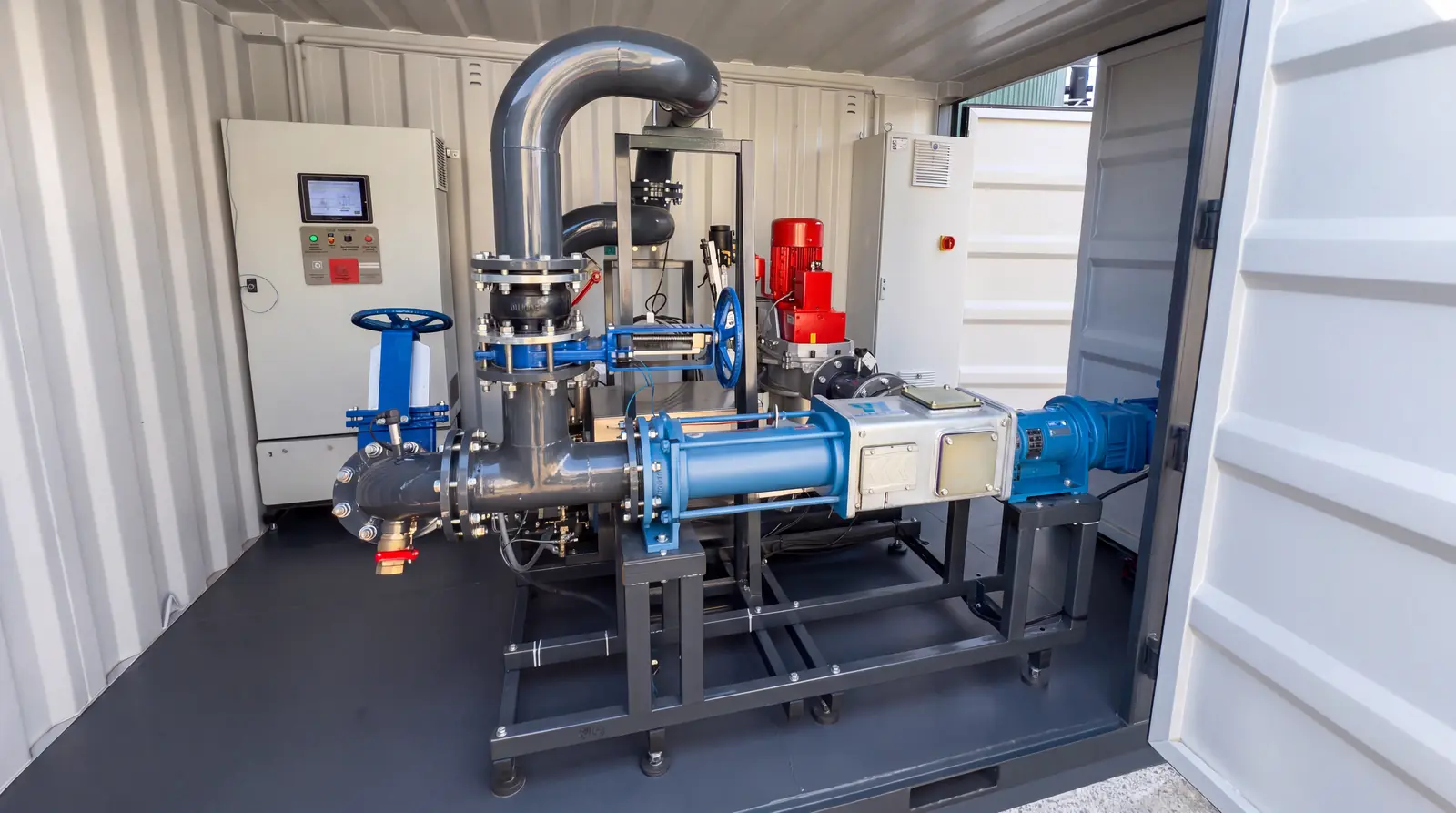
- Secure raw biogas from your existing plant, optimised with FaserMAX and the CleanCycle Cube
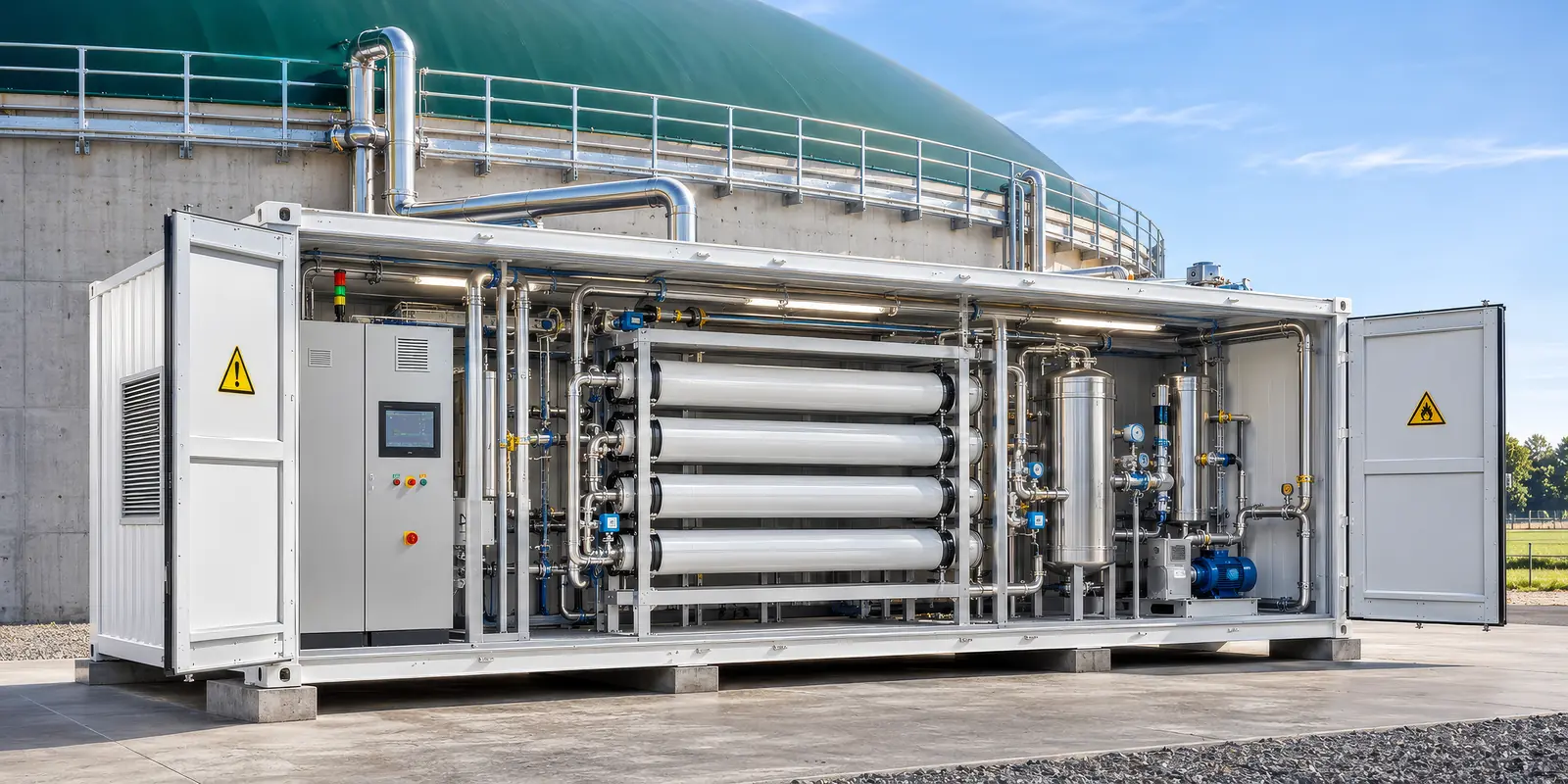
- Upgrade to biomethane membrane upgrading to min. 97% methane
- Compress and deliver 250–300 bar, by trailer to the hub – or into the grid where a grid injection point is nearby
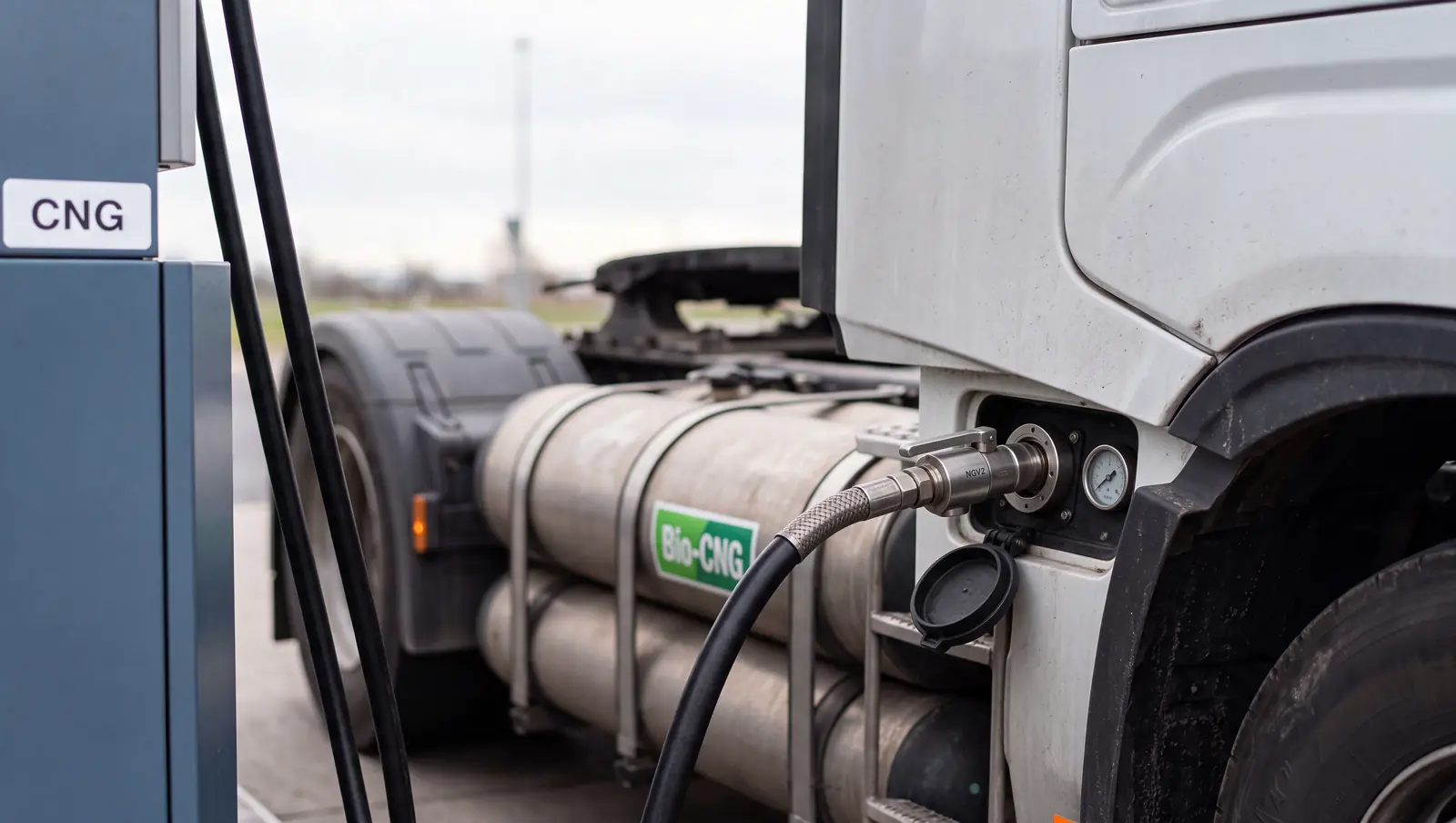
- Bio-CNG for HGVs sold together with the GHG quota
Financing of the technology, construction and operation: CleanCycle.
FaserMAX: more raw biogas from the same substrate
Raw biogas becomes fuel
- Primary product: bio-CNG as HGV fuel.
- Where a grid injection point is nearby, the gas goes into the grid.
- Bio-LNG is in preparation.
Certification and trading of the GHG quota
The GHG quota obliges companies that place fuels on the market to reduce the greenhouse gas emissions of their fuels by a percentage set by law (Section 37a BImSchG, Federal Immission Control Act).
| Year | Quota |
|---|---|
| 2026 | 12.0% |
| 2027 | 17.5% |
| 2030 | 26.5% |
| 2035 | 41.0% |
Source: Section 37a(4) BImSchG (Federal Immission Control Act)
The CO₂ is used as well
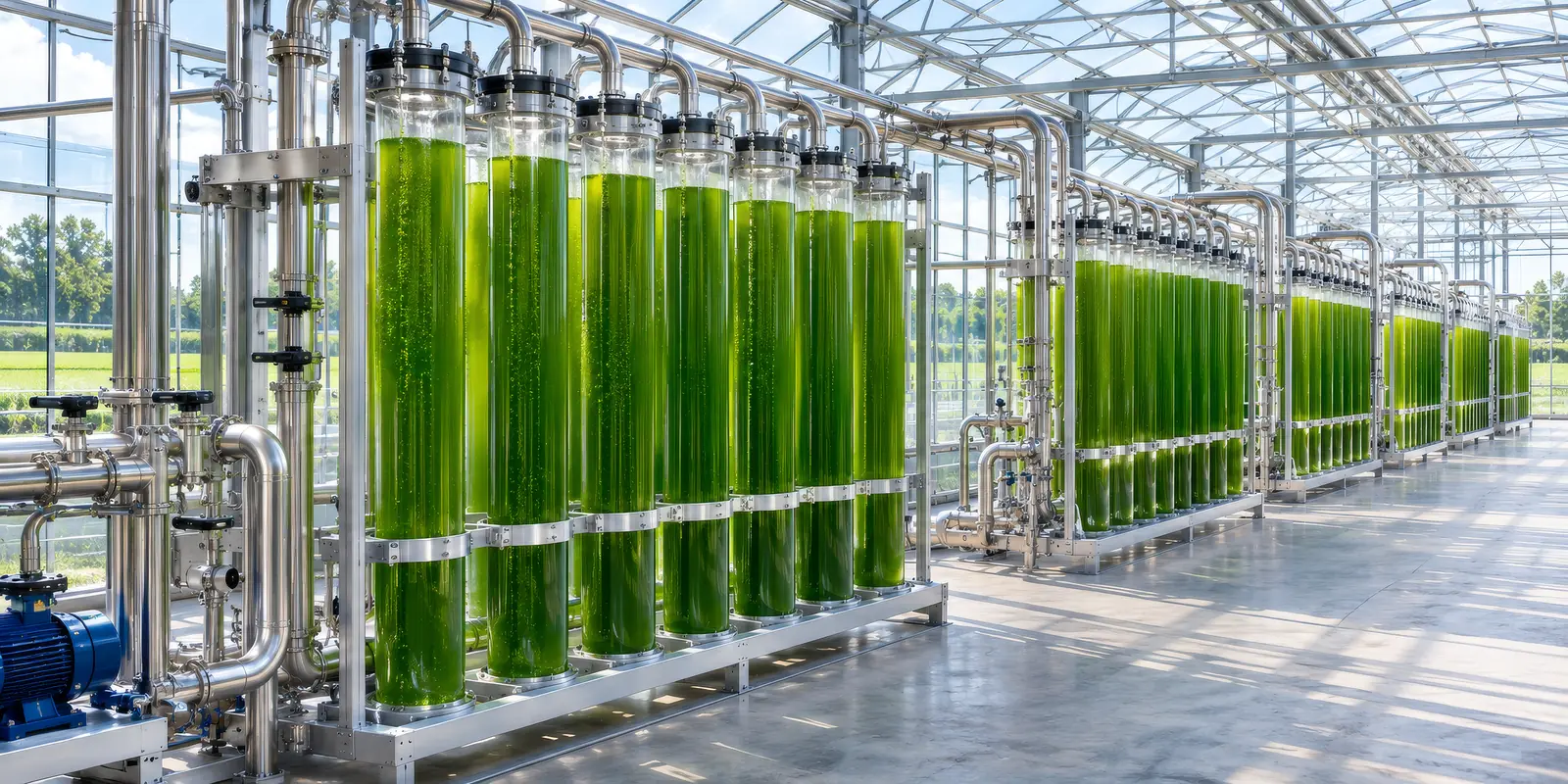
The CleanCycle Cube controls the biology in the digester
We provide and finance the Cube.
The virtual pipeline
- Upgrading on siteat least 97% methane
- Compression250–300 bar
- Delivery by trailerto the hub or directly to the customer
- Shared hubSeveral plants in a region share one hub.
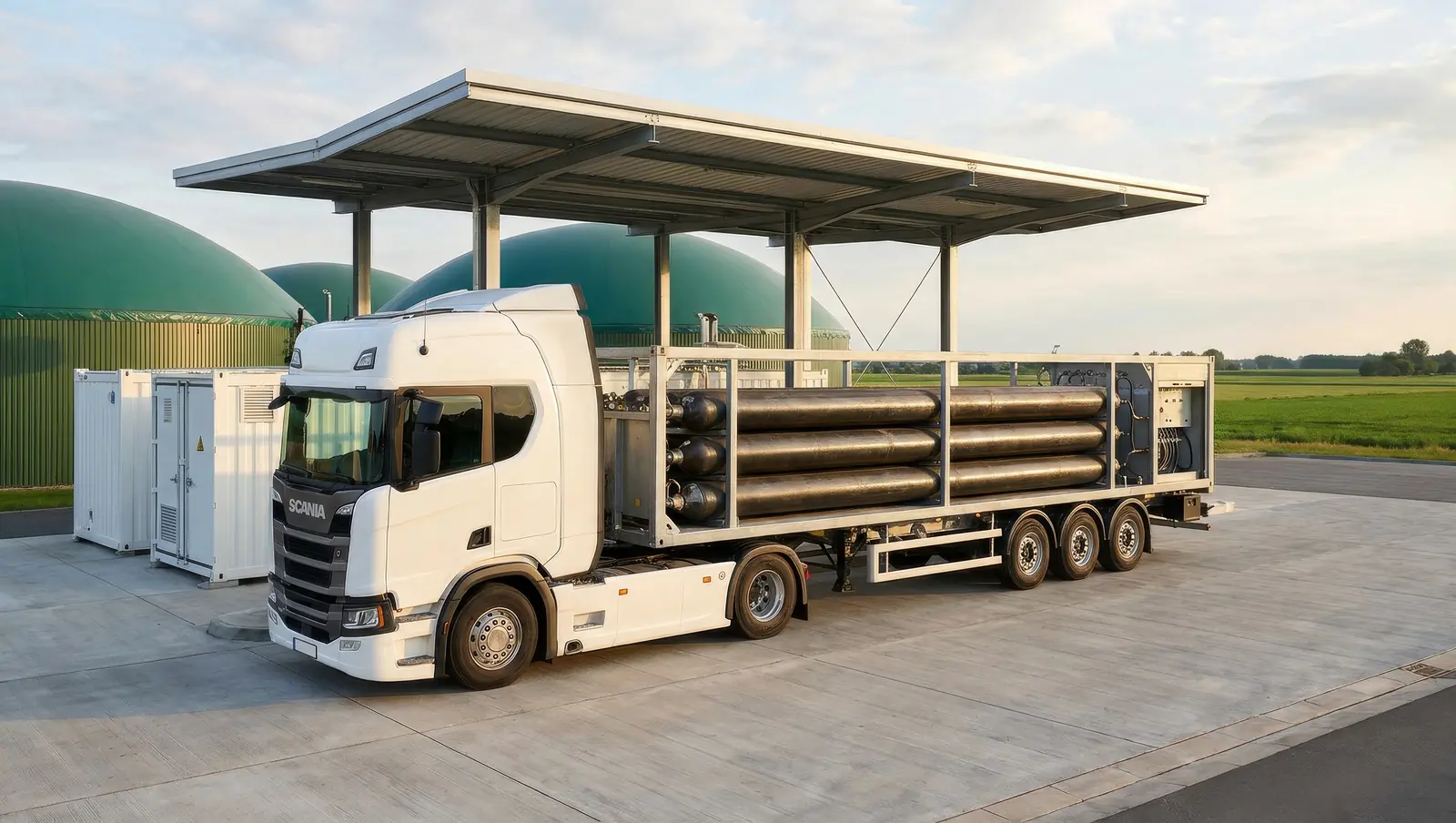
Where a grid injection point is nearby, the gas goes into the grid instead.
We carry the risk of the technology
- We only earn once your gas flows.CleanCycle secures the offtake.
- Three options for youSell your raw biogas, lease your plant or sell your plant.
- From residue to fuel.A closed loop.
Common questions about converting your plant
What happens to my biogas plant when its EEG support ends?
When support under Germany’s Renewable Energy Sources Act (EEG) ends, the electricity price falls – by 25% for a standard 500 kW plant – and operating profit (EBITDA) falls significantly; with CleanCycle, however, your plant keeps running. (Electricity price after EEG support: Bundesnetzagentur (Federal Network Agency), average biomass tender award values, October 2025 to October 2026; electricity price under the EEG and EBITDA: CleanCycle example 2026.) CleanCycle upgrades the raw biogas into biomethane and bio-CNG; you choose one of three options: selling your raw biogas, leasing your plant or selling it.
More in the article “End of EEG support: the options operators have now”
How much does converting to biomethane cost me?
With all three options, converting your plant means €0 for the technology. CleanCycle finances FaserMAX, upgrading and filling. If you feed into the gas grid, you bear the costs of the grid connection: the advance payment to the grid operator and your share of the connection costs. We will discuss the size of your share for your plant with you. CleanCycle also provides and finances the CleanCycle Cube.
Does my biogas plant need a gas pipeline nearby?
A gas pipeline nearby is not necessary: if there is no gas grid nearby, the biomethane is upgraded at your site, compressed to 250–300 bar and taken by trailer to the hub or directly to the customer – the virtual pipeline. Several plants in a region share one hub. Where a grid injection point is nearby, the gas goes into the grid. Nothing changes on your farm.
What is FaserMAX, and how much more gas does it produce?
FaserMAX is a mechanical substrate pre-treatment system that breaks down grass, manure and maize fibres, producing more raw biogas from the same substrate – around 20% more gas, verified in a batch test with your own substrates. The second lever is the CleanCycle Cube: our own measurement and control technology, which controls the biology in the digester and is financed, operated and managed by CleanCycle. FaserMAX is manufactured by Biorganics Energy GmbH.
What happens to the gas from my biogas plant?
Membrane upgrading brings the raw biogas to at least 97% methane; it is then sold primarily as bio-CNG, i.e. as HGV fuel, together with the greenhouse gas reduction quota (GHG quota). Where a grid injection point is nearby, the gas goes into the grid; otherwise it is compressed to 250–300 bar and delivered by trailer. The separated CO₂ serves as a carbon source in photobioreactors for microalgae. Bio-LNG is in preparation.
Is CleanCycle an option for biogas plants below 500 kW?
CleanCycle works with plants from 250 kW; smaller plants are bundled with neighbouring plants. The non-binding sample calculation on this website applies to a 500 kW plant. The figures for your plant are set out in the concept, and each of them can be traced back to your plant’s substrate and process data.
Next step
Is your plant a fit?
Five questions in four short steps – free and without obligation. CleanCycle will then get in touch with you.
Calls are answered first by CleanCycle’s AI assistant.